
Skip to content

HayagrivaThe Lord of Sacred Knowledge

The Divine Mind Upgrade — slide 1 of 20
1 / 20

Swipe to move through the slides

Download the deck (PDF)

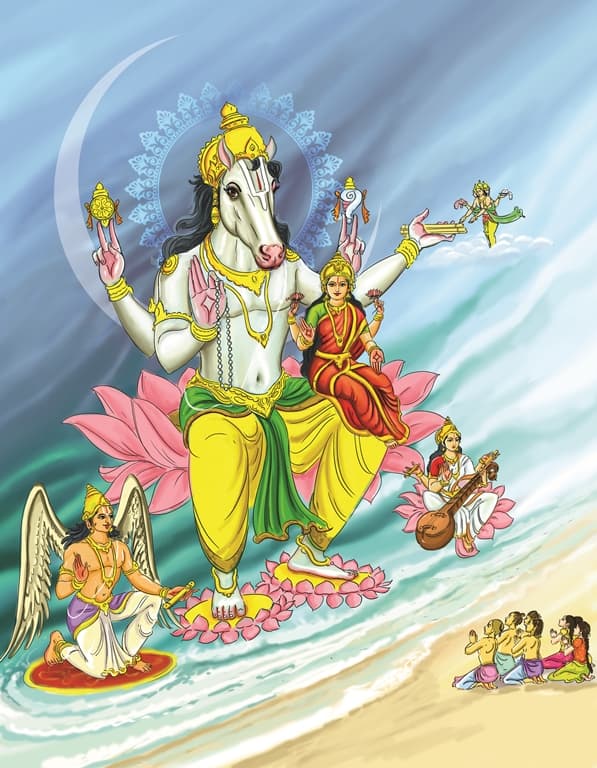
Sri Hayagriva Swami with Sri Lakshmi on a lotus, attended by Garuda and Saraswati, restoring the Vedas to Bramha
Sri: Hayagriva Swami — courtesy chinnajeeyar.org

A Story for Young Devotees

The Horse-Headed Hero Who Saved All Knowledge

Turn the pages of this little storybook and meet Lord Hayagriva — the bravest rescue mission in the history of the universe, and the reason we pray before we study.

In this picture: Lord Hayagriva, radiant white with a horse's head, holds the rescued Vedas while Sri: Lakshmi sits beside Him. Garuda bows, Saraswati plays her veena, and Bramha receives the Vedas back — the very story you're about to read.

Chapter 1 of 6

The Most Precious Treasure

Long, long ago — before the world as we know it began — the most precious treasure in the universe was not gold or diamonds. It was knowledge: the four Vedas, songs of pure wisdom that teach every soul the way back to God.

Bramha, the creator, kept the Vedas safe. With their sound he shaped stars, oceans, mountains, and every living thing.

Did you know? The Vedas were never written by anyone — they are eternal sounds, passed from teacher to student by chanting, for thousands of years!

Swipe the card to turn the page

Sacred Images

Hayagriva in Our Celebrations

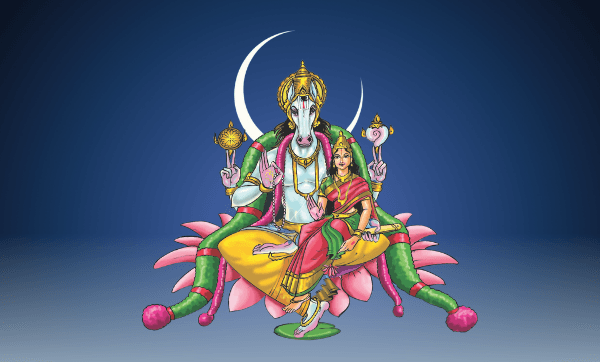
Illustration of Lord Hayagriva with Sri Lakshmi seated on a lotus beneath a crescent moon
Lord Hayagriva with Sri: Lakshmi — Divya Saketham
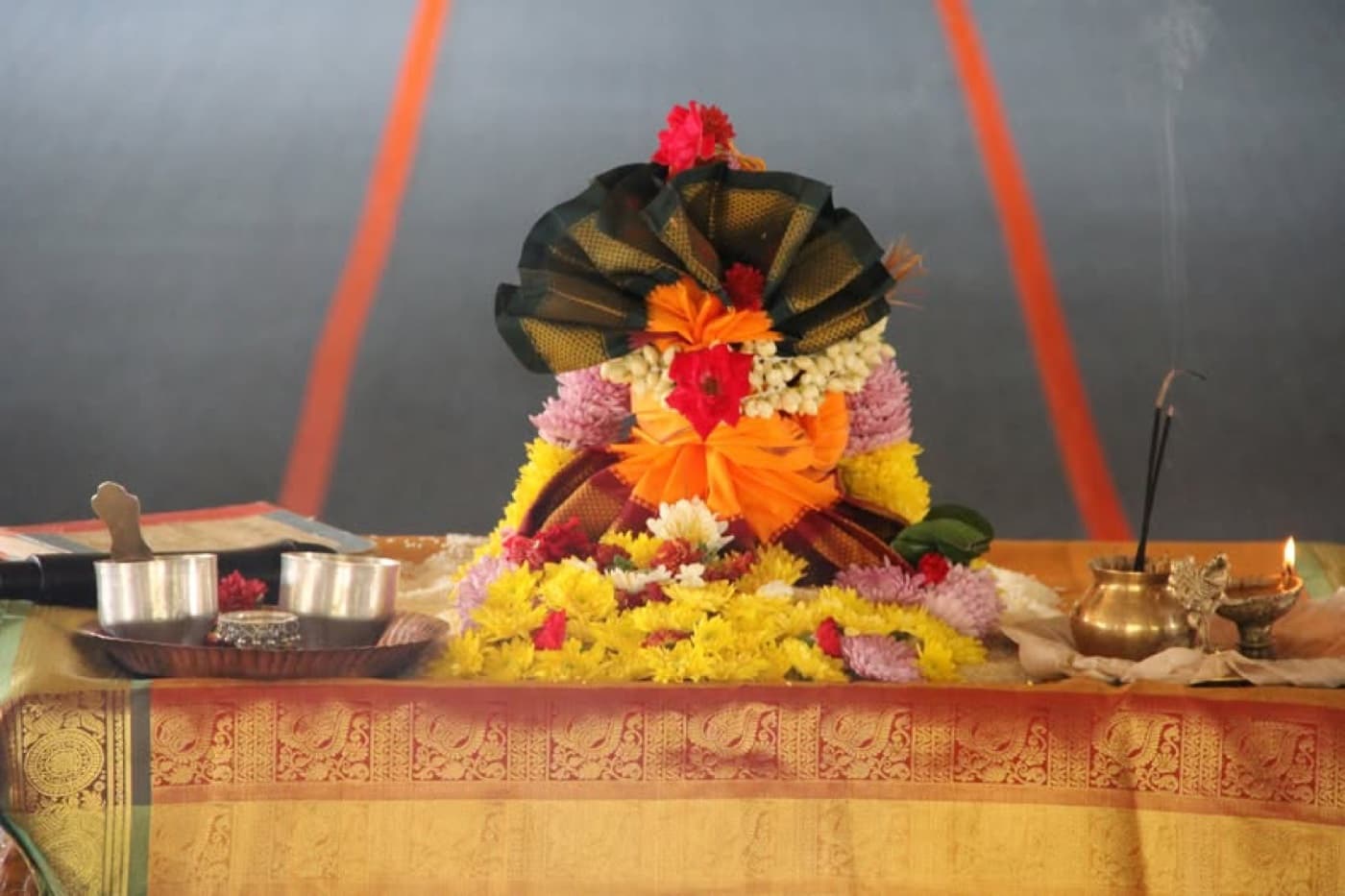
Flower-decorated kalasham at the Hayagriva Ishti homam
Hayagriva Ishti — the sacred homam for knowledge
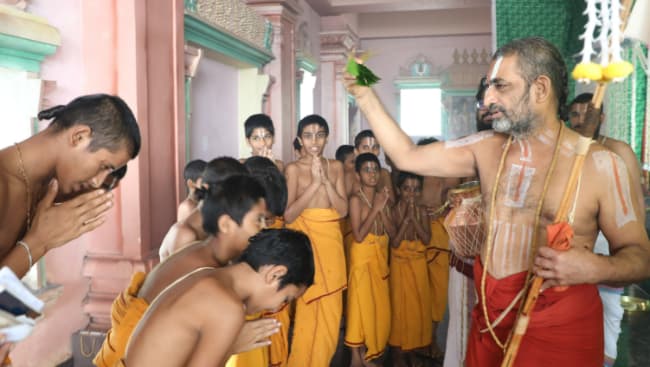
HH Sri Chinna Jeeyar Swamiji blessing young Vedic students on Hayagriva Jayanthi
Swamiji blesses young students on Hayagriva Jayanthi

Images courtesy of JETNJ, chinnajeeyar.org, and Divya Saketham.

Watch & Listen

Hayagriva with HH Sri: Chinna Jeeyar Swamiji

Sarva Vidya: Prada:ta — Let Us Remember Lord Hayagriva

HH Sri: Tridandi Chinna Jeeyar Swamiji explains why Hayagriva is the bestower of all knowledge, and how students of every age can seek His grace. (Telugu, ~21 min)

Hayagriva Jayanthi Puja — Union Fest 2025

Experience the full Hayagriva Jayanthi puja celebrated in the divine presence of HH Sri: Chinna Jeeyar Swamiji — abhishekam, chanting, and blessings for all students.

Chant Along

Learn to Chant with Swamiji

Play, listen, and repeat — the best way to learn is to chant along with HH Sri: Chinna Jeeyar Swamiji, a little every day.

Start Here — 15 Seconds

The Hayagriva Mantra

o:m namo: bhagavathe: dharma:ya
a:tma viso:dhana:ya namaha

“Salutations to the Lord who is Dharma itself, who purifies the soul.” Swamiji taught this mantra in his Hayagriva discourse — chant it before you sit down to study.

Go Further — 8 Minutes

Hayagriva Stotram — Chanted by Swamiji

All thirty-three verses of Swami Vedanta Desika's Hayagriva Stotram, chanted by HH Sri: Tridandi Chinna Jeeyar Swamiji. Students traditionally listen to or recite this before study and on exam days.

Jna:na:nandamayam de:vam nirmala sphatika:krutim
A:dha:ram sarva vidya:na:m Hayagri:vam upa:smahe:

“I worship Hayagriva, made of pure knowledge and bliss, clear as flawless crystal, the foundation of all learning.” — Verse 1

Audio courtesy of jeeyarmedia.com

Chant With the Homa — 7 Minutes

Hayagriva Dhya:na Slokas — Led by Swamiji

From the discourse above: Swamiji leads the Hayagriva dhya:na slokas from the Bhagavata, the Hayagriva Mantra, and the closing prayer for a clear mind, steady focus, and good speech — with devotees repeating each line. Turn on loop and chant along as many times as you like.

From Swamiji's Discourse

The Greatness of Hayagriva — In Swamiji's Words

Golden takeaways from the discourse above, rendered in English for young devotees. Watch the video to hear them in Swamiji's own voice.

1

The Teacher of All Teachers

We think of Ganesha, Saraswati, Skanda, and even Parama Shiva as givers of knowledge. But Swamiji reminds us: at different times, each of them received knowledge restored by Lord Hayagriva. The Bhagavata says even Bramha used to forget the Vedas each time he received them — but after Hayagriva Himself taught him, Bramha never forgot again!

2

A Day of Two Rescuers

Hayagriva Jayanti and Varaha Jayanti arrive together — on Shravana Nakshatra in the month of Shravana. Varaha Swami lifted and rescued Mother Earth; Hayagriva Swami dove down and rescued the Vedas. Two great rescue missions, celebrated on one day.

3

The Sacred Neigh — He:sha

Just as Narasimha unites lion and human in one form, Hayagriva unites a horse's face with a divine human body. And His neigh — called he:sha — is no ordinary sound: Swamiji says it carries the very essence of the Sa:ma Veda. When it rings out, our doubts melt away and true knowledge dawns.

4

Worshipped Across the Cosmos

The Bhagavata Purana (Canto 5) tells us that in Bhadra:sva Varsha — a land far beyond ours — the Lord is worshipped as Hayagriva to this very day. His glory is not limited to our corner of creation.

5

The Lord's Sweetest Promise

Swamiji shared the Varaha Charama Sloka: remember the Lord now, while you are young, strong, and able. Then, when a day comes that you cannot remember Him at all, He Himself promises — “I will remember My devotee, and I will carry him to the supreme destination.”

6

The Kanchi Connection

Lord Hayagriva is forever linked with Kanchi, where Varadaraja Swami emerged from Bramha's great yaga — the same holy place where Ramanujacharya received the Lord's six famous answers, and where Vedanta Desika sang thirty-three beautiful verses to Hayagriva.

Swamiji's Closing Prayer

“Let us pray to Hayagriva to grant us a good and clear mind, concentration and steadiness in everything we do, and the power to speak good words.”

Vidya gives humilityHumility earns respectRespect brings prosperityProsperity does good deedsGood deeds make many happy — a contented life

Om Sri: Hayagri:va Parabramhane: Namaha · Om Asmat Gurubhyo Namaha

English highlights rendered from the Telugu discourse “సర్వ విద్యా ప్రదాత హయగ్రీవుని స్మరిద్దాం రండి” by HH Sri: Tridandi Chinna Jeeyar Swamiji (JET World).

Go Deeper

Hayagriva Jayanti — The Full Tradition

For older students and parents: the scriptures, the stotras, and the Sri: Vaishnava tradition behind the story.

Among the avataras of Sri:man Na:ra:yana, Lord Hayagriva occupies a unique and exalted position as the presiding deity of all knowledge, learning, and wisdom. He is the horse-headed incarnation — radiant as the autumn moon, with a pure white body resplendent beyond measure, four arms bearing the conch, discus, book, and the gesture of bestowing knowledge.

Hayagriva Jayanti, observed on the full moon day of the month of Shravana (July-August), marks the sacred appearance of this transcendent form. It is no coincidence that this day falls on the same auspicious occasion as Upakarma (Avani Avittam) — the annual renewal of Vedic study. The Lord who restored the Vedas appears on the very day when the Vedas are ceremonially renewed, binding cosmic event to liturgical observance in a seamless arc of divine purpose.

Scriptural Foundation

The narrative and theology of Lord Hayagriva are established across multiple scriptural traditions. The Upanishad of the Atharva Veda reveals the Hayagriva Vidya — the contemplation of the Supreme in His horse-headed form as the essence of all wisdom. It prescribes the Hayagriva Mantra and declares that one who meditates upon this form attains the highest knowledge.

The Bhagavata Purana (Canto 2 and Canto 8) provides the narrative framework, recounting how the demons Madhu and Kaitabha stole the Vedas from Bramha during the cosmic dissolution, plunging all creation into darkness. The Pancharatra Agamas, which form the liturgical foundation of Sri: Vaishnava temple worship, elaborate extensively on the Hayagriva form, prescribing specific modes of worship, mantra, and meditation.

The Upanishad

The Upanishad opens with the declaration that Hayagriva is the Supreme Bramhan in the form of knowledge itself. It teaches that the Lord assumed this form not as a temporary expedient but as an eternal aspect of His nature — He is forever the source, sustainer, and goal of all Vidya. The Upanishad prescribes the Hayagriva Tara Mantra and states that its recitation destroys ignorance as the sun destroys darkness, granting the devotee mastery over all sacred learning.

Bhagavata Purana: The Theft of the Vedas

At the end of a cosmic cycle, when Bramha succumbed to sleep during the great dissolution, the sacred Vedas — the very breath of the Supreme — slipped from his mouth. Two powerful asuras, Madhu and Kaitabha, born from the earwax of Vishnu during His yogic sleep, seized the Vedas and plunged into the depths of the cosmic ocean. Without the Vedas, creation itself could not be renewed, for the Vedas are the blueprint of all existence, the eternal sound that sustains the universe.

The Story of Lord Hayagriva

When the demons Madhu and Kaitabha stole the Vedas from Bramha during the cosmic dissolution, the universe stood at the brink of annihilation. The Vedas are not mere texts — they are the eternal, uncreated sound that forms the very architecture of reality. Without them, Bramha could not perform creation anew. The cosmic order itself was imperiled.

Sri:man Na:ra:yana, perceiving the distress of Bramha and the peril to all worlds, assumed the Hayagriva form — a form of incomparable majesty. His body was radiant white, luminous as a mountain of pure crystal. His head was that of a divine horse, noble and sublime, with eyes blazing with the fire of omniscience. In His four arms He bore the instruments of cosmic sovereignty and the emblems of supreme knowledge.

The Descent into the Cosmic Ocean

Lord Hayagriva plunged into the unfathomable depths of the primordial waters where Madhu and Kaitabha had concealed the stolen Vedas. The demons, drunk with power and emboldened by their boon of near-invincibility, confronted the Lord. But Hayagriva, the very embodiment of Vedic knowledge, was irresistible. He slew the two asuras, recovered the four Vedas — Rig, Yajur, Sama, and Atharva — and restored them to Bramha, who could then resume the work of creation. The cosmic order was renewed, the sound of the Vedas once again reverberated through the universe, and all beings were saved from the darkness of ignorance.

This narrative carries profound theological significance. The theft of the Vedas represents the ever-present threat of tamas — the darkness of ignorance that seeks to swallow all knowledge and reduce creation to chaos. The descent of Hayagriva represents the eternal truth that the Supreme will never allow His wisdom to be permanently eclipsed. As long as there are souls who seek knowledge with sincerity, the Lord in His Hayagriva form will ensure that the light of the Vedas reaches them.

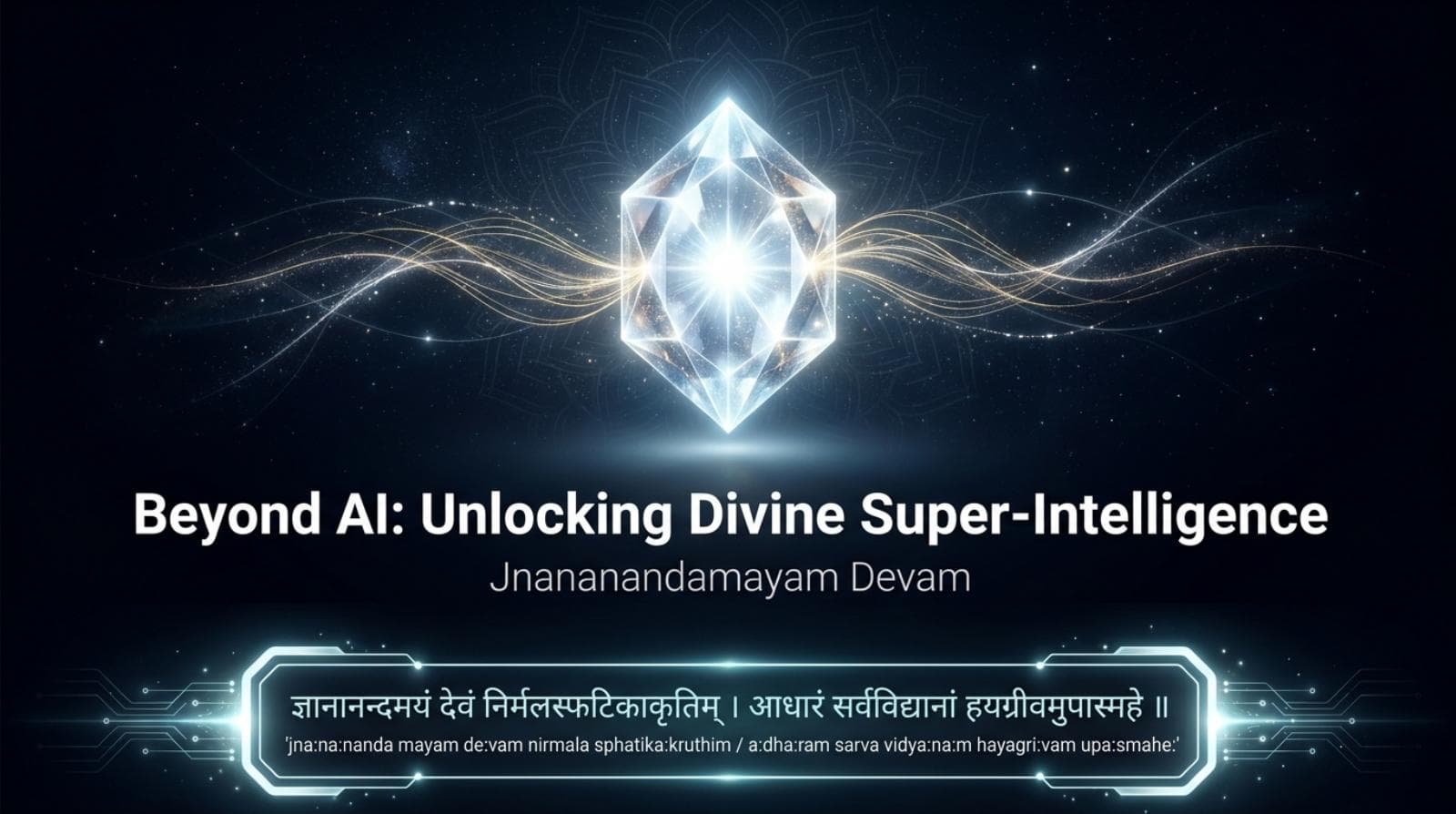
Jnanandamayam devam nirmala sphatikakrtim / Adharam sarva vidyanam Hayagrivam upasmahe

“I worship Lord Hayagriva, who is the embodiment of knowledge and bliss, pure as flawless crystal, the foundation of all learning.” — Hayagriva Stotram of Vedanta Desika, Verse 1

Sri: Vaishnava Significance

In the Vedic tradition, Lord Hayagriva is the presiding deity of all learning — sacred and secular alike. No study of scripture, no pursuit of knowledge, no act of teaching commences without first invoking Hayagriva. He is to the world of learning what Narasimha is to the world of protection: the immediate, accessible, ever-responsive form of the Supreme.

The connection between Hayagriva and the Sri: Vaishnava Acharya tradition reaches its most luminous expression in the life and works of Swami Vedanta Desika (1268-1369 CE), the towering polymath and theologian of the Vadagalai school. Desika is revered not only as a master of Vedanta but as a poet, logician, dramatist, and defender of the Sri: Vaishnava faith against rival philosophical schools.

Vedanta Desika and the Hayagriva Stotram

According to sacred tradition, Swami Vedanta Desika received a direct vision (sakshat darshan) of Lord Hayagriva at Tiruvahindrapuram. The Lord appeared before him in His resplendent horse-headed form, and from that transcendent encounter Desika composed the Hayagriva Stotram — a hymn of thirty-three verses that stands as the most celebrated and widely recited prayer to Hayagriva in all of Vedic literature. Every verse pulses with direct experience, not mere literary composition. Desika himself declared that his extraordinary command of language, logic, and scripture was entirely the grace of Lord Hayagriva.

Vidyarambha — The Commencement of Learning

In Sri: Vaishnava households, when a child begins formal education — the sacred ceremony known as Aksharabhyasamor Vidyarambha — the first prayer offered is to Lord Hayagriva. The child is made to write the first letters of the alphabet while the Hayagriva Mantra is chanted, invoking the Lord's blessings upon all future learning. This practice extends to every stage of scholarly pursuit: before examinations, before beginning the study of a new shastra, before commencing a public discourse, the Sri: Vaishnava invokes Hayagriva as the source and sustainer of all knowledge.

Hayagriva in the Pancharatra Tradition

The Pancharatra Agamas, which govern the liturgical and ritual life of Sri: Vaishnava temples, accord Hayagriva a distinguished position among the Vyuha and Vibhava forms of the Supreme. The Hayagriva form is classified among the thirty-nine Vibhava avataras and is prescribed its own specific mode of worship, iconography, and mantra system.

The Hayagriva Mantra

The Hayagriva Mantra, transmitted through the Acharya parampara, is considered among the most potent of all Vaishnava mantras for the attainment of knowledge. It is traditionally received through formal initiation from one's Acharya. The mantra is recited daily before the commencement of study, and its regular practice is said to bestow clarity of intellect, retentive memory, eloquence in speech, and mastery over the sacred sciences.

Hayagriva Panchayudha Stotram

The Hayagriva Panchayudha Stotramcelebrates the five divine weapons of Lord Hayagriva — the Sudarshana Chakra, the Panchajanya Conch, the Kaumodaki Mace, the Nandaka Sword, and the Sharnga Bow — each representing an aspect of the Lord's power to destroy ignorance and protect the faithful. This stotram is recited as a protective prayer, invoking Hayagriva's sovereign might against all obstacles to learning and spiritual progress.

In temple worship, the Hayagriva vigraha is typically depicted seated in padmasana, pure white in complexion, with the horse head crowned in brilliance. The daily invocation before study — whether of the Vedas, the Divya Prabandham, or the works of the Acharyas — begins with prostration before Hayagriva and the recitation of the opening verse of Desika's Hayagriva Stotram. This practice is so deeply embedded in Sri: Vaishnava life that the very act of opening a book is considered incomplete without first remembering the Lord of all Vidya.

How Sri: Vaishnavas Celebrate Hayagriva Jayanti

1

Shravana Purnima Observance

Hayagriva Jayanti falls on the full moon day of Shravana (July-August), the same auspicious day as Upakarma (Avani Avittam) — the annual ceremony of renewing one's commitment to Vedic study. The confluence of these two observances on the same day is considered deeply significant: the Lord of the Vedas appears on the day the Vedas are ceremonially renewed.

2

Special Abhishe:kam

Elaborate abhishekam (sacred bathing) is performed to the Hayagriva vigraha with milk, honey, curd, sandalwood paste, and pure water, accompanied by the chanting of the Hayagriva Mantra and Purusha Suktam. The deity is then adorned in white silk and fresh flowers, reflecting the Lord's crystal-pure radiance.

3

Hayagriva Stotram Recitation

The thirty-three verses of Vedanta Desika's Hayagriva Stotram are recited in full — either individually or in congregational chanting. Many devotees undertake a special parayanam (complete recitation) of the stotram 108 times on this day as an act of concentrated devotion.

4

Aksharabhyasam Ceremonies

Hayagriva Jayanti is considered the most auspicious day for Aksharabhyasam — the formal initiation of children into the world of learning. Children are brought before the Hayagriva deity, where they trace their first letters in a plate of rice while the elders chant the Hayagriva Mantra, consecrating the child's entire educational journey to the Lord of Knowledge.

5

Offering of Honey and Sacred Texts

Honey (madhu) holds special significance in Hayagriva worship, as it symbolizes the sweetness of knowledge. Offerings of honey, fruits, and cooked rice are made to the deity. Devotees also symbolically offer sacred texts at the Lord's feet, acknowledging that all knowledge flows from Him and belongs to Him.

6

Discourse and Scholarly Gatherings

Temples and mathas organize special discourses on the Hayagriva Stotram, the life of Vedanta Desika, and the philosophical significance of the Hayagriva avatara. These gatherings serve both as celebration and as a renewal of the scholarly spirit that Hayagriva embodies.

Sacred Mantras

Om Shrim Hayagrivaya Namah

The Hayagriva Mula Mantra — invocation of the Lord of knowledge for clarity, wisdom, and mastery of learning

Jnanandamayam Devam Nirmala Sphatikakrtim

Opening verse of the Hayagriva Stotram — the most sacred daily invocation before study in the Vedic tradition

Om Namo Narayanaya

The Ashtakshari — the eight-syllabled mantra that is the essence of all Vedas, the supreme refuge of the soul

Sri:man Na:ra:yana Charanau saranam Prapadye

The Dvaya Mantra — the double declaration of surrender to the lotus feet of Sri:man Na:ra:yana and Sri: (Lakshmi)

Sarva-dharman Parityajya Mam Ekam saranam Vraja

The Charama Sloka — the Lord's final, most confidential assurance of protection to the surrendered soul

The Essence: Sarana:gathi at the Acharya's Lotus Feet

The ultimate teaching of Hayagriva Jayanti transcends the mere celebration of a divine appearance. Lord Hayagriva did not merely restore the Vedas as an act of cosmic maintenance — He restored them because the Vedas are the pathway by which the soul returns to the Supreme. Without the Vedas, there is no knowledge of the self, no knowledge of the Lord, no knowledge of the relationship between them. The theft of the Vedas was not merely a loss of books but a severing of the bridge between the finite soul and the Infinite.

In the Vedic tradition, this bridge is restored and maintained through the Acharya parampara — the unbroken lineage of preceptors from Sri:man Na:ra:yana Himself, through Sri: Lakshmi, through Vishvaksena, through Nammalvar, through Nathamuni, through Yamunacharya, through Bhagavad Ramanuja, down to one's own Acharya. The devotee approaches the Acharya with humility and receives the three sacred mantras: the Ashtakshari (Om Namo Narayanaya), the Dvaya Mantra (the double declaration of surrender), and the Charama Sloka(the Lord's final, most confidential promise of protection).

As Hayagriva restored the Vedas to Bramha so that creation could continue, the Acharya transmits the essence of the Vedas to the disciple so that the soul's journey back to Sri: Vaikuntha may begin. This is the Rahasya Trayam — the three secrets — and this is the true meaning of Hayagriva Jayanti: not merely to honor the Lord of Knowledge, but to recognize that all knowledge finds its fulfillment in Sarana:gathi, complete surrender at the lotus feet of Sri:man Na:ra:yana through the grace of the Acharya.

He who meditates upon Hayagriva, who receives the mantras from the Acharya, who chants the Ashtakshari with a heart purified of pride — for that soul, the Lord of all Vidya Himself becomes the lamp that dispels the darkness of samsara. There is nothing more to be sought.

Based on the Upanishad, Bhagavata Purana, Pancharatra Agamas, Vedanta Desika's Hayagriva Stotram, and the Sri: Vaishnava Acharya tradition. This article is published for educational and devotional purposes by JETNJ — Sanjeevani Jeeyar A:sramam.

Sponsor This Festival

Your contribution supports the temple and ensures beautiful celebrations for the community. All tiers below go directly to JET USA through PayPal.

Or contribute a custom amount:

Other Ways to Give

Zelle: jetnj@jetusa.org
Check payable to: JET USA INC
Donate QR code

Donate

Join our community